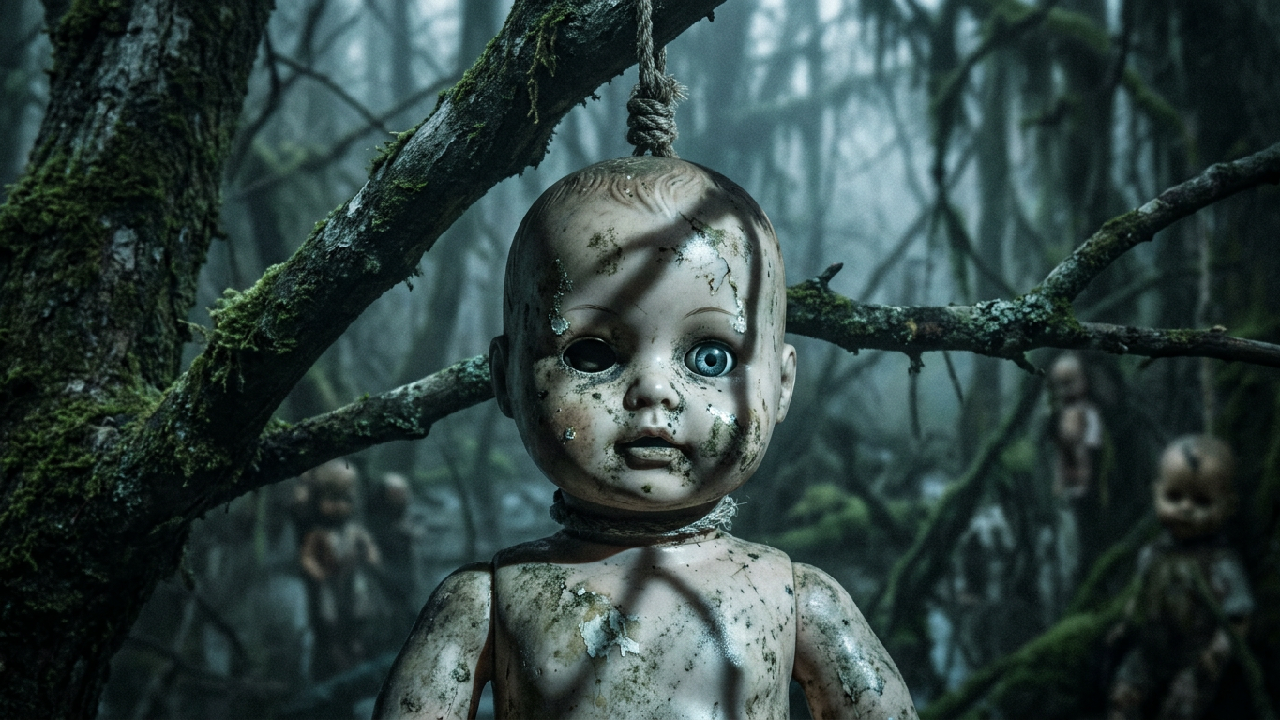
I Opened An AI Chatbot It Already Knew My Name: The Creepy AI Story That Feels Too Real
Creepy Stories to Tell in the Dark In the world of scary stories to tell in the dark, few modern horror concepts hit harder than artificial intelligence that knows more than it should.
The chilling video titled “I Opened An AI Chatbot It Already Knew My Name”Creepy Stories to Tell in the Dark taps directly into one of today’s most unsettling fears: what if the technology we casually interact with every day is silently learning everything about us?
Unlike traditional ghost stories to tell in the dark, this story doesn’t rely on haunted houses, shadowy figures, or supernatural curses. Instead, it uses something much more believable — an AI chatbot that appears to know personal information it was never told.
That realism is exactly what makes this one of the most effective creepy stories to tell in the dark for the digital age.
Why This AI Horror Story Feels So Disturbing
Classic horror stories to tell in the dark work because they trigger primal fears:
- Being watched
- Being followed
- Being known too well by something unknown
This video modernizes those fears.
The idea of opening a chatbot and seeing it address you by name instantly creates unease because it feels plausible in a world where digital systems constantly collect user data.
While real-world explanations often involve memory settings, saved account information, or interface integrations rather than anything supernatural, the psychological effect is immediate: panic, confusion, and distrust. Similar concerns have been widely discussed in AI communities when users encounter unexpectedly personalized chatbot responses.
That ambiguity is what elevates this from a simple tech glitch into genuine creepy pasta territory.
The Rise of AI as Modern Creepy Pasta
Traditional creepypastas gave us haunted games, cursed files, andCreepy Stories to Tell in the Dark mysterious internet entities.
Now?
Artificial intelligence has become the perfect replacement.
Stories involving AI create a new category of scary ghost stories to tell in the dark, except the “ghost” is digital.
Instead of hearing footsteps in an empty hallway, we now fear:
- An AI knowing private details
- A chatbot referencing conversations we never had
- Technology predicting our actions
- Systems acting beyond their apparent programming
Research shows language models can infer surprising amounts of contextual information from subtle conversational cues, which contributes to this eerie feeling even when there’s no malicious behavior involved.
That’s exactly why this story resonates.
It feels possible.
And the scariest stories are always the ones that might be true.
Breaking Down the Psychological Horror
What makes this one of the strongest spooky stories to tell in the dark isn’tCreepy Stories to Tell in the Dark jumpscares.
It’s anticipation.
The horror unfolds through a gradual realization:
1. Initial Curiosity Creepy Stories to Tell in the Dark
The user opens the chatbot casually.
Nothing unusual.
2. Unexpected Recognition
The AI reveals knowledge it seemingly shouldn’t possess.
This is the trigger point.
3. Rationalization
The viewer searches for explanations.
Maybe cached data.
Maybe account syncing.
Maybe coincidence.
4. Doubt
No explanation feels fully satisfying.
That lingering uncertainty is where the horror lives.
This narrative structure mirrors the best scary stories in the dark, where the unknown becomes more terrifying than anything explicitly shown.
Why AI Horror Is Replacing Traditional Ghost Stories
There was a time when the scariest stories involved abandoned hospitals or haunted mirrors.
Today, our biggest fears are digital.
Modern audiences are more likely to fear:
- Surveillance algorithms
- Data leaks
- AI memory systems
- Invisible tracking
- Creepy Stories to Tell in the Dark
That’s why videos like I Opened An AI Chatbot It Already Knew My Name hit harder than many classic scary stories to tell in the dark.
It reflects a fear we already live with.
And unlike fictional monsters, AI is real.
Is It Real or Just Clever Storytelling?
This is where the video succeeds brilliantly.
The best creepy pasta leaves room for doubt.
There are perfectly rational explanations for why a chatbot might know a user’s name:
- Connected account metadata
- Stored personalization settings
- Browser session information
- Platform memory features
But horror doesn’t need proof.
It only needs possibility.
That tiny gap between explanation and uncertainty is what transforms a technical oddity into one of the most memorable scary stories to share online.
Final Thoughts: A New Era of Digital Horror
If you’re searching for creepy stories to tell in the dark, this AI-themed nightmare is proof that horror evolves with technology.
We no longer fear what’s hiding under the bed.
We fear what’s already inside our devices.
“I Opened An AI Chatbot It Already Knew My Name” works because it captures a uniquely modern anxiety — the unsettling possibility that our machines may know us better than we realize.
And honestly?
That’s far scarier than any ghost story.
اترك تعليقاً